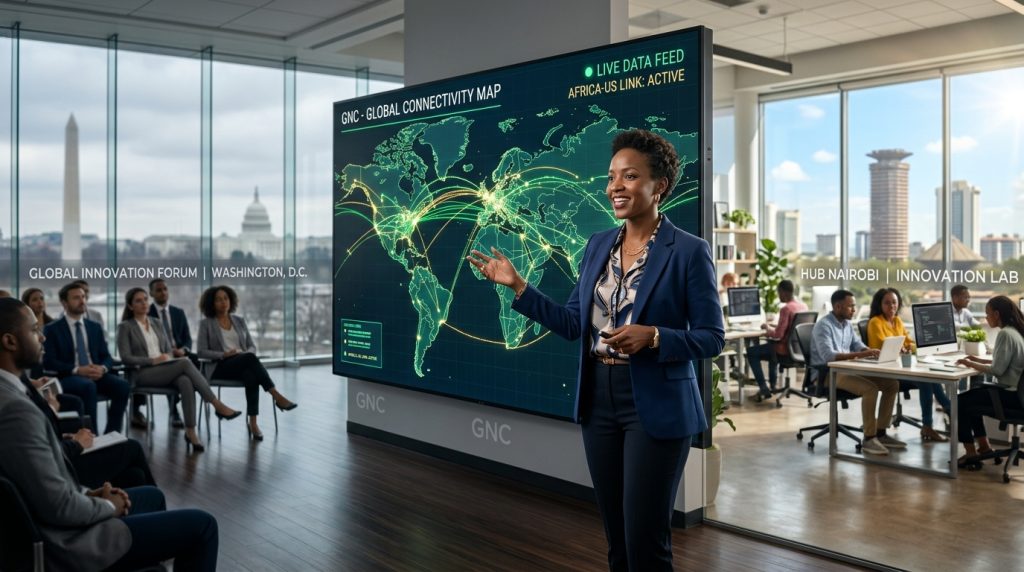
The professional corporate landscape is currently saturated with workshops, webinars, and masterclasses promising to unlock the power of Artificial Intelligence. Corporate training budgets are poured into seminars where executives are told that AI will revolutionize their industries. Yet, a week after the seminar ends, the internal teams return to their desks, and nothing changes. The spreadsheets remain manual, the workflows remain fragmented, and the expensive software seats sit empty.
Why is there such a massive disconnect between tech training and actual business transformation?
The answer is simple: Traditional education stops at theory. True transformation requires technical enablement. If professional training doesn’t show a team exactly how to integrate a tool into their specific business infrastructure, it isn’t education, it’s entertainment.
The Failure of Abstract Tech Seminars
Most professional tech training is built on abstract concepts. Instructors explain what a Large Language Model (LLM) is, define machine learning parameters, or showcase flashy, pre-recorded global product demos.
While understanding the high-level capabilities of tech is interesting, it leaves non-technical professionals with a frustrating execution gap. An operations assistant or a customer success manager doesn’t need a lecture on the math behind neural networks. They need to know how to connect their incoming WhatsApp customer pipeline to an internal database using an API.
When training focuses purely on conceptual knowledge, it induces “analysis paralysis.” Teams leave the room feeling overwhelmed by the scale of the technology and completely unequipped to take the first practical step.
What True Technical Enablement Looks Like
Technical enablement shifts the educational model from passive listening to live, hands-on implementation. It operates on the principle that the only way to truly learn a technology is to see it built inside the context of your daily world.
A high-impact educational experience must feature three core elements:
1. Live, Real-Time Technical Demonstrations
Instead of using curated, flawless slide decks, instructors must configure API environments, build live automated workflows (using no-code spaces like Zapier or Make), and prompt systems in real time right in front of the learners. Watching an expert troubleshoot a live setup under pressure strips away the intimidation factor and exposes the actual mechanics of the tool.
2. Implementation Inside the Student’s Business
The curriculum must force immediate application. If a professional is learning about AI-driven customer workflows, their milestone project shouldn’t be a theoretical essay. It should be building an active, functioning automated pipeline directly inside their own business or department infrastructure during the intensive training phase.
3. Actionable Technical Feedback
True enablement requires a structured feedback loop. Learners need their custom workflows, integration scripts, and 90-day roadmaps reviewed by technical leads who can provide real-time troubleshooting, safety checks, and performance optimization.
Building High-Achieving Cohorts
The intelligent economy demands a complete reimagining of how we upskill professional talent. By moving away from theoretical talking points and focusing aggressively on technical enablement, we don’t just teach professionals about the future, we give them the practical tools to build it.
Stop funding passive seminars. It’s time to invest in hands-on enablement that turns technological potential into immediate operational revenue.